
Tuesday, 13 January 2015
Letter to the World - book synopsis
Here is the synopsis in English of my book in Italian Letter to the World: Martha Graham danza Emily Dickinson edited by Aracne and just published:
Letter to the World (1940-41) is a little-known choreography Martha Graham dedicated to Emily Dickinson. Studying documents of various kinds (written, oral, audiovisual), Rosella Simonari intends to reconstruct it and place it in its context according to a cultural historical perspective which includes microhistorical and choreutic analysis. The result is powerful and unusual for the time, as Dickinson's poems were still published in an altered form with respect to the original and criticism on her was not fully developed. From this study different little-explored if not ignored aspects of Graham's work emerge, like her fascination with the Virgin, the importance of Puritanism and the "journey motif", that is the obstacle-filled path that the artist goes through to complete his/her work. We find these aspects in other Graham's dance pieces (such as Primitive Mysteries, Frontier and Errand into the Maze) and in those of other choreographers, writers and intellectuals, like Doris
Humphrey, William Carlos Williams, Frederick Jackson Turner and Joseph
Campbell.

Saturday, 10 January 2015
Letter to the World: Martha Graham danza Emily Dickinson

My book in Italian on Martha Graham's Letter to the World has been released. Here more info in Italian. Soon I will post more info in English.
Sunday, 28 December 2014
Martha Hill and The Making of American Dance
JanetMansfield Soares, Martha Hill and The Making of American Dance, Middletown,Wesleyan UP, 2009.
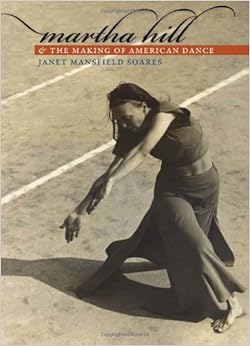
When most people think about dance, they picture a ballerina fluctuating in the air. They think of a moving body. They do not usually think of what or who made that possible. However, the conditions and, most of all, the people who make dance (and art in general) happen are fundamental and to focus on them is as fundamental in order for us to think of dance in a more articulated manner.
Martha Hill was one of them, she belongs to that group of people who we can considers standing in the wings of dance while dance is taking place. More precisely, Hill was The person who made dance happen in the United States for many decades. As a dance professor and educator, she had it fully inserted in the university curriculum, organized one of the most important festival for modern dance, the Bennington Festival, and established a solid dance department at the Julliard School at Licoln Center.
Martha Hill was one of them, she belongs to that group of people who we can considers standing in the wings of dance while dance is taking place. More precisely, Hill was The person who made dance happen in the United States for many decades. As a dance professor and educator, she had it fully inserted in the university curriculum, organized one of the most important festival for modern dance, the Bennington Festival, and established a solid dance department at the Julliard School at Licoln Center.
Janet
Mansfield Soares, who personally knew Hill and had access to unpublished
material, has written an insightful biography, rich in precious details and
remarkable analysis. It is as if a huge gap in dance history had been
finally filled up. Thanks to her determination and knowledge of the field, Hill
succeeded in strengthening the legitimation of dance among the other art forms,
thus giving it visibility and respect.
Who was
this strong and powerful woman? She came from the MidWest, never had
a tight relationship with her family and was not much interested in marriage. She
studied gymnastics and dance at the Battle Creek Normal School of Physical Education where she graduated
in 1920. In 1927 she
went to see Martha Graham perform, was converted to her approach to
dance and decided to go and study with her in New York. It was in this period
that she began to understand that dance “must establish itself as a separate
art form” in order to be fully recognized. It was the same convinction Graham
and other modern dancers had, but Hill stopped dancing and dedicated herself to teaching and working towards the thorough presence of dance in the academic curriculum.
That is
why, along with her teaching role in various universities (like the University of
Oregon and New York University), in 1934 she managed to organize the first
season of a pivotal festival for modern dance, the Bennington Festival, held in
Bennington, Vermont. According to Hill, modern dance was not a movement but a “point
of view” and, in the 1930s, it badly needed affirmation and recognition. Hill,
together with a set of committed collaborators, gave it this chance at
Bennington. At Bennington College, a small college for women, she had begun
teaching that same year. The Festival put together the big names of modern
dance, like Martha Graham, Doris Humphrey, Charles Widman and Hanya Holm. They would
teach classes but also work on choreographic pieces that they would present at
the end of the Festival. Together with them, other important figures taught
there, poet Ben Belitt, mythographer Joseph Campbell, dance critic Joseph
Martin, set designer Arch Lauterer and composer Louis Horst, among many others.
The atmosphere at Bennington was unique and its focus on modern dance a successful
experiment that led other institutions to do the same. It lasted until 1942
with a year’s stop in 1939 when the Festival was moved to Mills College in
California. It was then organized at Connecticut College under the name
American Dance Festival and since 1978 it has found a new home at Duke
University in North Carolina.
In 1950
Hill was contacted by William Schuman, composer and director of the prestigious
Julliard School of Music in New York, “to design and direct a dance division
for the music school”. That was the beginning of another crucial adventure for her and for the establishment of a tradition of dance at University level. Hill
succeeded again, not without overcoming difficult obstacles dealing with
budget, space facilities and the relationship between ballet and modern dance. In
particular, with regards to the last one, she had to fight a controversial
fight with impresario, writer and ballet sustainer Licoln Kirstein who was
championing George Balanchine’s ballet style and dismissing the relevance of modern
dance at Julliard. At Julliard, Hill always supported a wide range of dance
styles and techniques, among them ballet, but she was resolute in not giving
modern dance up. She won and modern dance continued to be taught in the
department by steadfast choreographers such as José Limón and Anna Sokolow. Ballet
teacher was and remained choreographer Antony Tudor.
Soares also
gives us a thorough picture of Martha Hill’s personal life with her
unconventional and close friendship with Mary Jo Shelley, her alter ego in organizing
the Bennington Festival and many other enterprises and with her deep love for Thurston
Davies, known as Lefty, president of Colorado College and a married man who
married Hill after his divorce was over.
In his 1936
book America Dancing, Martin exemplified Hill’s maverick and vital personality
and choices: “She could have made a successful career as a dancer…for she has a
definite flair for movement and an exceptional gift for composition, but
education is her paramount interest, and for it she is uniquely equipped”.
Thursday, 2 October 2014
The bull, the cow, the rhythm and the dancing
ISRAEL GALVÁN
AND AKRAM KHAN’ TOROBAKA
RomaEuropa Festival, Auditorium della Conciliazione, Rome, 25 September 2014, h 21
RomaEuropa Festival, Auditorium della Conciliazione, Rome, 25 September 2014, h 21
 |
| Khan and Galván, photo Jean Louis Fernandez. |
There is a
bull and a cow ('toro' and 'baka' in the title), there is violence and peace, there is flamenco and kathak and
there is a bit of Spain and a bit of India in Israel Galván and AkramKhan’ Torobaka that opened the Romaeuropa Festival 2014. Stereotypically
Spain is associated with flamenco and bulls as India is with kathak and cows, but
this piece is a lot more than that, it is entering a dimension where
excellence, irony, intensity, confrontation and rhythm mix in a superb
performance.
To begin
with, Spanish dancer and choreographer Galván’s flamenco is and is not
flamenco, it is rather a remarkable style that deconstructs it from the inside,
breaking its lines and bringing its percussive nature to an almost airborne
level. Then, in his thought-provoking choreographic work, Khan’s kathak is reinvented and mingled with
contemporary dance, giving a sense of rootedness and three-dimensional quality
to the moving body.
It goes without saying that the departing images have already been s/mashed and overturned,
because Torobaka is about meeting the Other and is also about going beyond
that, going beyond symbols and stereotypes to reach the pulsating rhythm we all live in. Shall we call it a
duet? Galván and Khan are the two only dancers onstage and they do interact a
lot, but the term ‘duet’ only makes sense if we multiply it, if we turn it
into a layered series of others that play a fundamental role in the piece: I am
referring to the two musicians, Bobote and B. C. Manjunath, the two singers
Davide Azurza and Christine Leboutte and to rhythm and sound production.
The piece
is made of various sections and takes place on a stage which is for most of its
part covered by a circular platform surrounded by the musicians and the
singers. At the beginning, Galván and Khan are both barefoot and confront each
other, exploring space and sound. They both wear the same costume, a tunic that
recalls kathak and tight trousers that can be associated with flamenco. Perfect
is the ‘dialogue’ between Galván’s feet articulation and Manjunath’s
percussion.
 |
| Azurza, Galván, Leboutte, photo Jean Louis Fernandez. |
Then Galván
puts his flamenco shoes on and performs a solo outside the circle, front-stage
right, with a microphone. Again Manjunath is his alter ego, playing with his
movements as Galván plays with Manjunath's vocal sounds. Irony is a key feature in
Galván’s dancing, irresistible is the moment when he points his finger upwards
exclaiming “E.T. phone home”. This is flamenco with a bit of comic relief! When he performs
a zapateado (flamenco footwork) inside Khan’s kathak set of bells, we know a
change of scenery is going to occur and Khan is going to appear.
In the
third section, Khan is down to the floor with a pair of flamenco white shoes on
his hands. He plays them against the stage floor, against each other
alternating their sound with the one produced by his knees and head. It is as
if sound ran through his body and could be created by everything he has or is. Instead
of Galván’s irony here we have a profound movement density, even when he
entertains a ‘dialogue’ with Bobote, who takes the flamenco shoes from his
hands, throws them into the wings and starts playing las palmas (flamenco
hand clapping) provoking Khan to respond. And Khan sits down on a chair and dances a
seated dance.
After this,
singers and musicians take the stage in a beautiful ensemble. Singers Azurza
and Laboutte are phenomenal throughout the whole piece, singing songs from
as different traditions as Italy and Spain. On some occasions
their chanting seems to slow the dancing down, creating an unusual unbalance, but
their bravura is impeccable for the aural background of the two performers.
The last
section is an explosion of movement, sound and rhythm with Khan particularly
in tune with Manjunath’s percussion, Khan's ghungru (ankle bells) reverberating throughout
the entire theatre.
Rhythm
is one key element in this work, a common ground for both dancers to move and
investigate choreographic patterns. Historically speaking, it is difficult to
trace a clear path connecting flamenco to kathak, but, according to some,
gypsies left India and travelled through the Middle-East and Europe until some
of them arrived in Spain. In this sense, a beautiful film documentary comes to mind,
Tony Gatlif’s Lacho Drom (1993) where there is very little dialogue as the main role
is played by the rhythm of music and dancing.
 |
| Khan, photo Jean Louis Fernandez. |
As it often
happens, we find out that what or who we considered to be the Other is much
more similar to us than we thought, it is an animal we may like, a person we
become fond of. In Torobaka two types of gestures remained in my mind recalling me that, the
joined hands both Galván and Khan recurrently perform pointing them downward
towards the floor/earth from which so much of their energetic rhythm comes, and
their hugging and touching which testify to their artistic bond. According to
Galván one has to kill the audience before the audience kills you, that is his
peculiar motto which testifies to the violent, aggressive element inherent in
flamenco, while to Khan dance is like an offer, a gift one donates to the
audience, as the cow donates milk to the world in Hindu religion. Again the bull and the cow, violence and peace, and in Torobaka dance is definitely a gift so exquisite it can virtually kill.
Sunday, 31 August 2014
Literature, Modernism and Dance
Susan
Jones, Literature, Modernism, and Dance, Oxford: Oxford University Press, 2013.
The relationship between literature and dance has only
recently began to be addressed by scholars and, during Modernism, numerous
interactions took place. Susan Jones rightly speaks of reciprocity, as it was
not a question of one art influencing the other, but a two-way process, where
sometimes dance inspired writers, and some other times literature inspired dance. Jones's intention is to uncover this reciprocal approach, even though most of her examples focus on writers
who reflected on and were influenced by dance. They include important names such as
Stéphane Mallarmé, William Butler Yeats, D. H. Lawrence, Virginia Woolf, Ezra
Pound, T. S. Eliot and Samuel Beckett. What emerges from these studies is that
dance was indeed a substantial part of the Modernist literary aesthetics.
Accomplished
writers like Virginia Woolf did go to the theatre to watch the ballet and were
particularly attentive about it. In her work, Woolf’s “interest in spatial
forms” and her way of arranging her novels according to specific patterns, can
be seen as a kind of “text as choreography”, an utterly beautiful image. One example is given by her most
experimental work, The Waves, published in 1931, where her “representation of a
cyclical notion of history through the typographical distinction of roman and
italicized passages (…) moves closer to an imagining of text as choreography,
to be experienced by the reader as one ‘body’ moving in relation to another”.
T. S. Eliot's poem Burnt Norton presents an insightful dance image connected with the idea of stillness, "at the still point of the turning world. Neither flesh nor fleshless;/Neither from nor towards; at the still point, there the dance is". Jones scrutinises this concept contextualising it within Eliot's knowledge of ballet (he went to see the Ballets Russes) and linking it to a sense of timelessness and transcendence.
T. S. Eliot's poem Burnt Norton presents an insightful dance image connected with the idea of stillness, "at the still point of the turning world. Neither flesh nor fleshless;/Neither from nor towards; at the still point, there the dance is". Jones scrutinises this concept contextualising it within Eliot's knowledge of ballet (he went to see the Ballets Russes) and linking it to a sense of timelessness and transcendence.
Jones’s analysis
of Samuel Beckett’s relationship to dance is a welcome surprise. Especially when
she talks about Léonide Massine, the marionette topos in the Ballets Russes’ Petrouchka
and Beckett’s reflections. Beckett quotes the ballet in his novel Murphy and, according to Jones, “Petrouchka
triggered Beckett’s thinking about philosophical treatments of the issue of
self-consciousness and movement”. In later works Beckett’s approach to
movement became more abstract and oriented towards a “minimalist treatment” as
is shown by “his ongoing philosophical interest in the relationship between
stillness and mobility”.
On the
other hand, there were dancers who chose novels for their work and a fertile
example is represented by the experience of various choreographers at Ballet Rambert.
Jones highlights that one of Ballet Rambert’s specificity was to work on
narrative in order to represent the characters’ psychological insights. She aptly
talks of dance drama and presents a list of significant examples, such as Antony
Tudor, Andrée Howard and Agnes De Mille whose collaboration with
Ballet Rambert in England is little known. The way these choreographers dealt with interiorisation recalls Martha Graham’s use of
inner characterization which is quite layered and distinctive. Graham is mentioned but unfortunately no real comparison between her work and Ballet Rambert's dance dramas is given.
Literature, Modernism, and Dance is an
invaluable contribution to the study of dance and literature and it starts
filling a huge gap within Modernist Studies. It is not the only one, but it is one of
the few and, most of all, one of the most documented and original ones. Other notable choreographers and dance companies included in the book are Loïe Fuller, Martha
Graham, The Ballets Russes with a splendid analysis of both Nijinsky's Rite of Spring and Nijinska's Les Noces, Léonide Massine and Rudolf Laban. Jones’s analysis is filled
with marvelous technical details and observations which do justice to both literature and dance. In
particular, the above-mentioned chapters on Woolf and Eliot are revealing and riveting.
Furthermore so, if we think of the persistent neglect of the subject on both
dance and literary scholars’ part. The reasons are quite complex, as Jones notes,
and have to do, for example, with the way dance is seen and was seen with
respect to literature and other art forms.
Jones’s
choice not to centre on a specific method or approach makes the book almost
encyclopedic in scope and, at times, a bit fragmentary. The overall impression is that each chapter is worth a book-length study on
its own and one is left with a sense of thrilling anticipation to get some more.
Thursday, 21 August 2014
"The Ancestress figure", my essay on the European Journal of American Culture
 Sometimes essays take a while to get published, sometimes they need to be rewritten and sometimes they get rejected on questionable bases. With regards to this last option, it has happened to me on a number of occasions and, if I find the courage (it is a very sotf spot of mine), I will to talk about it in the future. In the meanwhile, though, there are essays that are being published, as it happened to my "The Ancestress figure: Puritanism in Martha Graham's choreography", on the present number of the European Journal of American Culture, published by Intellect, here the link for those interested in knowing more about it. Chapter 6 of my forthcoming book (in Italian), Letter to the World: Martha Graham danza Emily Dickisnon, published by Aracne is a more updated version of this essay.
Friday, 11 July 2014
Vital Ritual
THE MARTHA GRAHAM DANCE COMPANY IN ITALY (TIVOLI)
Villa Adriana, Tivoli, 25 June 2014, h 21.00
Villa Adriana, Tivoli, 25 June 2014, h 21.00
 |
| The Rite of Spring, photo Musacchio&Ianniello. |
Martha
Graham was always interested in dance and ritual and, in a way,
her approach to dance can be summarized by this evocative term, ‘ritual’. Her teacher,
dancer and choreographer Ruth St. Denis, had developed an elegant style reminiscent
of the Orient, transforming dance into something profound and meaningful. In addition
to that, at the end of the 1920s and beginning of the 1930s, Graham encountered
the concept of ‘dance as ritual’ in two fundamental experiences: as a The
Chosen One in Massine’s 1930s Rite of
Spring and as observer of the pueblo cultures in the Southwest of the
United States. The former was an intense and, at times, troubled situation as
she often quarreled with Massine and struggled to adapt to a balletic
aesthetic. The second was particularly inspiring and brought her to witness the
pueblo’s contact with the land through dance, an aspect that left an enduring
mark in her life. The evening at the ancient Roman Villa Adriana in Tivoli
presented this vital ritualistic element within Graham’s work in a breathtaking environment. Part of the Festival Internazionale di Villa Adriana, the event was organised in collaboration with Daniele Cipriani Entertainment. Pity that Tivoli itself is not very
trourist-friendly, especially if you do not have a car.
Janet
Eilber, the artistic director of the Company, gave a short introductory speech, with the aid of a translator. On the menu there were some of Graham’s best pieces, the
lyrical Diversion of Angels (1948), the
dramatic Errand, a reworking of Errand into the Maze (1947) by Luca Veggetti, Depak Ine (2014), that Nacho Duato specifically
created for the Company and last but not least, The Rite of Spring, Graham’s 1984 potent version of Nijinsky’s 1913
masterpiece, set to Stravinsky’s revolutionary score.
I had not
seen the Company perform since 2010 and the first thing I noticed was the
change in the cast. Many new people have joined the Company, which looks
fresher without losing its status. At the same time, the presence of
fundamental figures such as Tadej Brdnik and Blakeley White-McGuire keeps it in
a brilliant form. Diversion of Angels
is the perfect start for an evening like this. As one of the few pieces where Graham did not create
a strong female central protagonist, it is poetic, dynamic and
cheerful, and centred on the three aspects of love, each danced by a woman dressed
in a symbolic colour: yellow for adolescent love, red for erotic love and white
for mature love.
Each woman has a partner and they are often surrounded by a
group of other couples. Eilber has talked about a “world without gravity” and
“geometric patterns” with regards to this piece and it is true: the grounded,
floor-based Graham technique acquires a lighter flavor in the vibrant
interchange of patterns drawn by the dancers. Natasha Diamond-Walker is a
refined Woman in White and Abdiel Jacobsen dances beautifully with her, Mariya
Dashkina Maddux is particularly apt in her role as the Woman in Red, a role of
precision and fluidity. As she enters the stage, she slips on a humid stage (it
is a bit chill) but immediately gets up, thus recalling one of Graham’s best
mottos, “My dancers fall so they may rise”. When she performs the
split fall it is as if she were seductively melting to the floor and then up again she goes in her flaming red dress.
 |
| The Rite of Spring, photo Musacchio&Ianniello. |
In 2012 hurricane
Sandy has done a lot of damage to the Company and has
affected Errand into the Maze,
ruining Isamu Noguchi’s sculptures. This has brought to the birth of Errand, a recreation of the piece by
choreographer Luca Veggetti, with the aid of Graham principal dancer Miki
Orihara. There are no sculptures and there are some changes in the choreography
as well as the costumes and lights. It is perhaps the best piece in the
programme. Samll and red-haired Blakeley White-McGuire is a stunning
protagonist in search of her way to deal with her fears, which are embodied by
a tattooed and sculpted Ben Schultz, the Creature of Fear. The piece is a
reworking of the Theseus and Ariadne myth, where the former is absorbed by the
latter to embark on an inner quest. Veggetti’s
changes are subtle and significant: a light-coloured veil covers the male
figure’s head, instead of Noguchi’s horns and a transparent chic stick replaces
the one Noguchi had created. However, what is perhaps the most striking
element, is that he never leaves the stage, walking his
way along its perimeter when the heroine performs her solo pieces. And
when he does walk, he takes away the stick from the back part of his neck where
it is positioned to make his figure stiff and
bidimentional. This adds a new mysterious tension to his role. White-McGuire’s
marshalling through the piece, her hands on her womb at the beginning and her
self-reliance growing as she fights against the Creature, is very deep and
dramatic. This is a particularly ritualistic work, both in form and content.
 |
| Depak Ine, photo Musacchio&Ianniello. |
As are the
other two choreographic pieces, Depak Ine and The Rite of Spring. In creating
Depak Ine, Nacho Duato was inspired by Darwin’s evolution theory, Eilber notes
in the introduction, and that is why the dancers move highly grounded to the
floor in a more relaxed and fluid way with respect to the
Graham technique. They also resemble posthuman creatures, the result, perhaps,
of human, animal and machine union (John Talbot's electronic music is the perfect touch, in this sense).
Watching this layered piece after the Graham pieces creates a shift in
perception about the dancers’ abilities and proficient technical potentiality.
They are simply, amazing! They move in groups and in couples with PeiJu
Chien-Pott lying onstage, face down, for quite a while. Once we convince ourselves
that her role is to figure as the static and still contrapuntal point to the
other dancers, she ‘wakes up’ and astonishes us with a flexibility I have seldom seen
anywhere else: she throws her legs through space, bending, standing, and
breaking the time-space continuum…in my mind she is a new and vigorous
embodiment of the Chosen One, the sacrificial victim of The Rite of Spring,
which closes the evening.
This last
choreography has the flavor of the above-mentioned Southwest pueblo cultures as a Shaman, confidently interpreted by Ben Schultz, guides the sacrifice required for a propitious spring. Men and
women dance in separate groups, the stage is not very big and the masterfully Graham organized structure of this work suffers a bit because of that, even though it acquires an
intimate touch it did not have. When the Shaman chooses his victim, it is a
striking moment of despair and revelation: she is on her partner's shoulders and is almost abruptly taken away from him. Xiaochuan Xie dances a
belligerent Chosen One, even when she is overtaken by the Shaman’s controlling
power. I reckon she will get even better with time and the experience needed for this
role.
The stage
is now empty, people start moving away, a nice walk awaits us to get out of
Villa Adriana, the best closure for this vital ritual.
Subscribe to:
Posts (Atom)