Friday, 10 April 2015

Letter to the World - detailed synopsis


Here is a detailed synopsis in English of my book in Italian, Letter to the World: Martha Graham danza Emily Dickinson, published by Aracne, Rome, 2015.

What does the word ‘choreography’ mean? Does it just mean a sequence of steps or something more layered and complex? And what does it mean to choreograph a piece? These are the questions I ask myself at the beginning of my book, Letter to the World: Martha Graham danza Emily Dickisnon, and the book itself is polymorphous answer.

In the Introduction, I individuate a methodological approach that includes cultural history and dance studies. I also talk about my politics of location and my glocal perspective on Graham (as I lived, studied and worked both in a global city like London and in a small local town in central Italy). Last but not least, I also point out to a terminological question to designate Graham’s vision, finding a suitable answer in the word ‘choreosophy’.
Divided into two parts, the book first focuses on Letter to the World, its reconstruction, analysis and contextualization, and second, on what this analysis unveils about her work in terms of themes and structure. In some cases, this investigation brings in the work of other choreographers and intellectuals, such as Doris Humphrey and William Carlos Williams. Here is a brief description of each chapter:

PART ONE

Chapter One deals with the reconstruction “on the page” (that is for scholarly, not performative purposes) and explores written, oral and audiovisual documents to map out an idea of what Letter to the World was about. These documents include reviews from the first series of performances presented between 1940 and 1941, when the piece was consistently changed, descriptive analyses, like the one written by Marica Siegel, an unpublished scenario by Terese Capucilli, oral testimonies by Pearl Lang and Armgard von Bardeleben and audiovisual material, like the 1970s black-and-white video reconstruction.

Chapter Two focuses on characters and dance phrases: the two protagonists, the One Who Dances and the One Who Speaks, entertain a dialogic and fruitful relationship, while the other characters represent emanations of the poet’s personality. In particular, the dancing protagonist interprets the most demanding dance phrases of the piece, while the other characters have each a signature movement or movement quality that shapes their role.

Chapter Three is about the spoken lines and the modernist-cyclical structure of the work. The lines are fundamental to portray some of the characters and, most of all, they are particularly significant in following the development of the dancing protagonist’s “inner landscape”, as Graham used to call it.

Chapter Four is dedicated to the critical material published on Dickinson up to 1940. It also includes the analysis of two plays inspired by her and produced in the 1930s: Alison’s House (1930) by Susan Glaspell and Brittle Heaven (1935) by Vincent York and Frederick Pohl. This is done to show the interest in Dickinson at the time, and the different approaches these playwrights had in comparison with Graham.

PART TWO

Chapter Five goes back in time to a piece that is both structurally and thematically related to Letter to the World, Primitive Mysteries (1931). Structurally, it follows the cyclical development I have mentioned above, while thematically, it presents the white-dressed figure of the Virgin Mary. It is a work inspired by the notion of dance as ritual, a notion that Graham acquired from her study of the Native American cultures in the Southwest, a notion that poses controversial questions dealing with colonialism and primitivism.

Chapter Six treats a fundamental aspect, that of Purtianism as an oppressive and necessary force. The Ancestress, in Letter to the World, embodies this force and obliges the One Who Dances to confront her fears. An analysis of this character is done in relation to the piece and to a traditional religious community, that of the Shakers, which, in the eighteenth and nineteenth centuries, was quite widespread in the United States. Then, the examination of writer William Carlos Williams’s book of essays, In the American Grain (1925), shows his profound influence over Graham’s work, including his view on Puritanism. In the light of this analysis, the Ancestress is compared to the Revivalist in Graham’s Appalachian Spring (1944), where Puritanism is depicted in more emphatic terms.

Chapters Seven and Eight take a wider look at Letter to the World, through what I call the ‘journey motif’ in Graham. Letter to the World can be considered a journey into the artist’s creative process. This journey is a theme that recurs in Graham’s choreosophy, with different articulations, depending on the period she dealt it with. In Chapter Seven, the ‘journey motif’ is analysed with regards to Graham’s interest in North American history and, in particular, with reference to the frontier theory as devised by Frederick Jackson Turner. Two pieces will be the focus of this motif: the solo Frontier and the group piece American Document. Both of them are, in a way, connected with Letter to the World, in that they deal with North American history. In Chapter Eight, the ‘journey motif’ is transformed into an inner experience, which is another fundamental component in Letter to the World and is an aspect that anticipates many other pieces to come. One of them, Errand into the Maze, is taken as reference point, because it focuses on the journey as inner battle, through an original reinterpretation of the Theseus and the Minotaur Greek myth. The Chapter closes with an analysis of Graham’s version of The Rite of Spring as it epitomises the artist’s struggle in the name of her art, a theme we already find in Letter to the World.

In the Conclusion I investigate the still quite neglected relationship between dance and literature, a relationship that has, in part, caused the neglect of Letter to the World in the hope for this negative trend to change in the near future.  

Sunday, 8 March 2015

Letter SI MUOVE - La Feltrinelli, Ancona, Italy (photographs)

The first book presentation of Letter to the World: Martha Graham danza Emily Dickinson has gone very well with an attentive audience, interesting questions and a beautiful atmosphere. I would like to thank La Feltrinelli bookshop for having organised the event, Stefania Zepponi and all those who have come. Here are some photographs.

The bookshop window in Ancona.
Me just before the presentation.
Stefania Zepponi who has presented the book with me.
The audience just before the beginning of the presentation.
A moment of the presentation.
Me showing some Graham movements.

Wednesday, 25 February 2015

Letter SI MUOVE - La Feltrinelli, Ancona, Italy


Letter SI MUOVE (is on its way) as a series of talks are soon going to start. On 6th March 2015 I will be at La Feltrinelli in Ancona (an important bookshop, part of one of the most significant book shop chains in Italy), Corso Giuseppe Garibaldi, 35, to talk about Letter to the World with dancer, choreographer and dance writer at Krapp's Last Post, Stefania Zepponi. We start at 6 pm. For info: 071 207 3943.

Tuesday, 13 January 2015

Letter to the World - book synopsis

Here is the synopsis in English of my book in Italian Letter to the World: Martha Graham danza Emily Dickinson edited by Aracne and just published:


Letter to the World (1940-41) is a little-known choreography Martha Graham dedicated to Emily Dickinson. Studying documents of various kinds (written, oral, audiovisual), Rosella Simonari intends to reconstruct it and place it in its context according to a cultural historical perspective which includes microhistorical and choreutic analysis. The result is powerful and unusual for the time, as Dickinson's poems were still published in an altered form with respect to the original and criticism on her was not fully developed. From this study different little-explored if not ignored aspects of Graham's work emerge, like her fascination with the Virgin, the importance of Puritanism and the "journey motif", that is the obstacle-filled path that the artist goes through to complete his/her work. We find these aspects in other Graham's dance pieces (such as Primitive Mysteries, Frontier and Errand into the Maze) and in those of other choreographers, writers and intellectuals, like Doris Humphrey, William Carlos Williams, Frederick Jackson Turner and Joseph Campbell.


Saturday, 10 January 2015

Letter to the World: Martha Graham danza Emily Dickinson


My book in Italian on Martha Graham's Letter to the World has been released. Here more info in Italian. Soon I will post more info in English.

Sunday, 28 December 2014

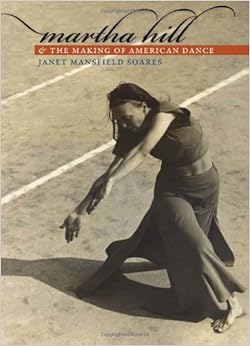
Martha Hill and The Making of American Dance


JanetMansfield Soares, Martha Hill and The Making of American Dance, Middletown,Wesleyan UP, 2009.

When most people think about dance, they picture a ballerina fluctuating in the air. They think of a moving body. They do not usually think of what or who made that possible. However, the conditions and, most of all, the people who make dance (and art in general) happen are fundamental and to focus on them is as fundamental in order for us to think of dance in a more articulated manner. 

Martha Hill was one of them, she belongs to that group of people who we can considers standing in the wings of dance while dance is taking place. More precisely, Hill was The person who made dance happen in the United States for many decades. As a dance professor and educator, she had it fully inserted in the university curriculum, organized one of the most important festival for modern dance, the Bennington Festival, and established a solid dance department at the Julliard School at Licoln Center.

Janet Mansfield Soares, who personally knew Hill and had access to unpublished material, has written an insightful biography, rich in precious details and remarkable analysis. It is as if a huge gap in dance history had been finally filled up. Thanks to her determination and knowledge of the field, Hill succeeded in strengthening the legitimation of dance among the other art forms, thus giving it visibility and respect.

Who was this strong and powerful woman? She came from the MidWest, never had a tight relationship with her family and was not much interested in marriage. She studied gymnastics and dance at the Battle Creek Normal School of Physical Education where she graduated in 1920. In 1927 she went to see Martha Graham perform, was converted to her approach to dance and decided to go and study with her in New York. It was in this period that she began to understand that dance “must establish itself as a separate art form” in order to be fully recognized. It was the same convinction Graham and other modern dancers had, but Hill stopped dancing and dedicated herself to teaching and working towards the thorough presence of dance in the academic curriculum.

That is why, along with her teaching role in various universities (like the University of Oregon and New York University), in 1934 she managed to organize the first season of a pivotal festival for modern dance, the Bennington Festival, held in Bennington, Vermont. According to Hill, modern dance was not a movement but a “point of view” and, in the 1930s, it badly needed affirmation and recognition. Hill, together with a set of committed collaborators, gave it this chance at Bennington. At Bennington College, a small college for women, she had begun teaching that same year. The Festival put together the big names of modern dance, like Martha Graham, Doris Humphrey, Charles Widman and Hanya Holm. They would teach classes but also work on choreographic pieces that they would present at the end of the Festival. Together with them, other important figures taught there, poet Ben Belitt, mythographer Joseph Campbell, dance critic Joseph Martin, set designer Arch Lauterer and composer Louis Horst, among many others. The atmosphere at Bennington was unique and its focus on modern dance a successful experiment that led other institutions to do the same. It lasted until 1942 with a year’s stop in 1939 when the Festival was moved to Mills College in California. It was then organized at Connecticut College under the name American Dance Festival and since 1978 it has found a new home at Duke University in North Carolina.

In 1950 Hill was contacted by William Schuman, composer and director of the prestigious Julliard School of Music in New York, “to design and direct a dance division for the music school”. That was the beginning of another crucial adventure for her and for the establishment of a tradition of dance at University level. Hill succeeded again, not without overcoming difficult obstacles dealing with budget, space facilities and the relationship between ballet and modern dance. In particular, with regards to the last one, she had to fight a controversial fight with impresario, writer and ballet sustainer Licoln Kirstein who was championing George Balanchine’s ballet style and dismissing the relevance of modern dance at Julliard. At Julliard, Hill always supported a wide range of dance styles and techniques, among them ballet, but she was resolute in not giving modern dance up. She won and modern dance continued to be taught in the department by steadfast choreographers such as José Limón and Anna Sokolow. Ballet teacher was and remained choreographer Antony Tudor.

Soares also gives us a thorough picture of Martha Hill’s personal life with her unconventional and close friendship with Mary Jo Shelley, her alter ego in organizing the Bennington Festival and many other enterprises and with her deep love for Thurston Davies, known as Lefty, president of Colorado College and a married man who married Hill after his divorce was over.

In his 1936 book America Dancing, Martin exemplified Hill’s maverick and vital personality and choices: “She could have made a successful career as a dancer…for she has a definite flair for movement and an exceptional gift for composition, but education is her paramount interest, and for it she is uniquely equipped”.

Thursday, 2 October 2014

The bull, the cow, the rhythm and the dancing

ISRAEL GALVÁN AND AKRAM KHAN’ TOROBAKA
RomaEuropa Festival, Auditorium della Conciliazione, Rome, 25 September 2014, h 21

Khan and Galván, photo Jean Louis Fernandez.
There is a bull and a cow ('toro' and 'baka' in the title), there is violence and peace, there is flamenco and kathak and there is a bit of Spain and a bit of India in Israel Galván and AkramKhan’ Torobaka that opened the Romaeuropa Festival 2014. Stereotypically Spain is associated with flamenco and bulls as India is with kathak and cows, but this piece is a lot more than that, it is entering a dimension where excellence, irony, intensity, confrontation and rhythm mix in a superb performance.

To begin with, Spanish dancer and choreographer Galván’s flamenco is and is not flamenco, it is rather a remarkable style that deconstructs it from the inside, breaking its lines and bringing its percussive nature to an almost airborne level. Then, in his thought-provoking choreographic work, Khan’s kathak is reinvented and mingled with contemporary dance, giving a sense of rootedness and three-dimensional quality to the moving body.

It goes without saying that the departing images have already been s/mashed and overturned, because Torobaka is about meeting the Other and is also about going beyond that, going beyond symbols and stereotypes to reach the pulsating rhythm we all live in. Shall we call it a duet? Galván and Khan are the two only dancers onstage and they do interact a lot, but the term ‘duet’ only makes sense if we multiply it, if we turn it into a layered series of others that play a fundamental role in the piece: I am referring to the two musicians, Bobote and B. C. Manjunath, the two singers Davide Azurza and Christine Leboutte and to rhythm and sound production.

The piece is made of various sections and takes place on a stage which is for most of its part covered by a circular platform surrounded by the musicians and the singers. At the beginning, Galván and Khan are both barefoot and confront each other, exploring space and sound. They both wear the same costume, a tunic that recalls kathak and tight trousers that can be associated with flamenco. Perfect is the ‘dialogue’ between Galván’s feet articulation and Manjunath’s percussion.

Azurza, Galván, Leboutte, photo Jean Louis Fernandez.
Then Galván puts his flamenco shoes on and performs a solo outside the circle, front-stage right, with a microphone. Again Manjunath is his alter ego, playing with his movements as Galván plays with Manjunath's vocal sounds. Irony is a key feature in Galván’s dancing, irresistible is the moment when he points his finger upwards exclaiming “E.T. phone home”. This is flamenco with a bit of comic relief! When he performs a zapateado (flamenco footwork) inside Khan’s kathak set of bells, we know a change of scenery is going to occur and Khan is going to appear.

In the third section, Khan is down to the floor with a pair of flamenco white shoes on his hands. He plays them against the stage floor, against each other alternating their sound with the one produced by his knees and head. It is as if sound ran through his body and could be created by everything he has or is. Instead of Galván’s irony here we have a profound movement density, even when he entertains a ‘dialogue’ with Bobote, who takes the flamenco shoes from his hands, throws them into the wings and starts playing las palmas (flamenco hand clapping) provoking Khan to respond. And Khan sits down on a chair and dances a seated dance.

After this, singers and musicians take the stage in a beautiful ensemble. Singers Azurza and Laboutte are phenomenal throughout the whole piece, singing songs from as different traditions as Italy and Spain. On some occasions their chanting seems to slow the dancing down, creating an unusual unbalance, but their bravura is impeccable for the aural background of the two performers.

The last section is an explosion of movement, sound and rhythm with Khan particularly in tune with Manjunath’s percussion, Khan's ghungru (ankle bells) reverberating throughout the entire theatre.
Rhythm is one key element in this work, a common ground for both dancers to move and investigate choreographic patterns. Historically speaking, it is difficult to trace a clear path connecting flamenco to kathak, but, according to some, gypsies left India and travelled through the Middle-East and Europe until some of them arrived in Spain. In this sense, a beautiful film documentary comes to mind, Tony Gatlif’s Lacho Drom (1993) where there is very little dialogue as the main role is played by the rhythm of music and dancing.
 
Khan, photo Jean Louis Fernandez.
As it often happens, we find out that what or who we considered to be the Other is much more similar to us than we thought, it is an animal we may like, a person we become fond of. In Torobaka two types of gestures remained in my mind recalling me that, the joined hands both Galván and Khan recurrently perform pointing them downward towards the floor/earth from which so much of their energetic rhythm comes, and their hugging and touching which testify to their artistic bond. According to Galván one has to kill the audience before the audience kills you, that is his peculiar motto which testifies to the violent, aggressive element inherent in flamenco, while to Khan dance is like an offer, a gift one donates to the audience, as the cow donates milk to the world in Hindu religion. Again the bull and the cow, violence and peace, and in Torobaka dance is definitely a gift so exquisite it can virtually kill.